There is a strange contradiction at the heart of becoming a writer.
You are constantly being told that you need to learn. Learn structure. Learn character development. Learn pacing. Learn dialogue. Learn point of view. Learn how to edit. Learn how the publishing industry works. Learn what readers expect. Learn what agents are looking for.
And you should.
Nobody becomes a better writer by deciding they already know everything.
But somewhere amongst all that learning, there is a danger that isn’t discussed nearly enough. The more advice you absorb, the easier it becomes to forget that you are supposed to be the person writing the book.
You can become so busy trying to write the book that other people think you should write that you eventually lose sight of the reason you started writing it in the first place.
That is a problem.
Because your story is not a group project.
You can invite people into it. You can ask for opinions. You can employ an editor. You can listen to other writers. You can take criticism from readers and change enormous parts of the manuscript because somebody has shown you something you couldn’t see for yourself.
But at some point, you have to come back to the same question:
What do I want this story to be?
That question should remain yours.
Learning the Rules Doesn’t Mean You Have to Obey All of Them
Writing advice often gets presented as though there is a correct way of doing things.
Don’t start with this.
Don’t use that tense.
Never use adverbs.
Show, don’t tell.
Start with action.
Don’t start with action.
Your protagonist must have a goal.
Your protagonist shouldn’t reveal their goal too early.
You need a three-act structure.
You need a five-act structure.
You need Save the Cat.
You need to outline.
You shouldn’t outline because you’re a pantser.
At some point, a new writer can be forgiven for wondering whether they’re actually writing a novel or attempting to complete a particularly complicated driving test.
The problem isn’t that these techniques are useless. Many of them are extremely useful. The problem is what happens when a technique becomes a rule in your mind rather than a tool in your toolbox.
Good writers know how techniques work. Better writers understand why they work. And experienced writers eventually become comfortable deciding when they don’t work for the story in front of them.
There is nothing wrong with learning the rules.
In fact, learning them can be liberating.
Once you understand why something works, you can make an informed decision about when to use it, when to adapt it and when to ignore it completely.
That is very different from blindly following a formula because somebody on the internet told you that successful authors do it that way.
Advice Is Information, Not an Order
This is probably the most useful way to think about criticism.
When somebody gives you feedback, they are giving you information.
They are not necessarily giving you instructions.
That distinction sounds small, but it changes everything.
Imagine somebody reads one of your chapters and tells you that a particular scene doesn’t work. They suggest cutting it completely.
You have several choices.
You could dismiss them because you like the scene.
You could delete the scene because they told you to.
Or you could stop and ask a much more interesting question:
Why doesn’t the scene work for them?
Perhaps the scene is too long.
Perhaps nothing changes during it.
Perhaps the character’s motivation isn’t clear.
Perhaps the scene is important but arrives too early.
Perhaps the reader has misunderstood something you thought was obvious.
Or perhaps the scene works perfectly well and simply isn’t to that particular reader’s taste.
Their suggested solution might therefore be completely wrong.
But their reaction might still be useful.
This is where writers need to develop judgement.
Writers & Artists recently described learning when to accept and when to ignore feedback as an important part of a writer’s skill set, noting that feedback can be adapted, adopted or ignored depending on what the writer believes is right for the work.
That is a much healthier relationship with criticism than simply accepting everything or rejecting everything.
The Person Giving the Advice Doesn’t Know Your Story Better Than You Do
They might know more about writing.
They might have published ten books.
They might be an editor.
They might be an agent.
They might have been writing for thirty years.
All of those things can make their opinion extremely valuable.
But none of them means they automatically understand what you are trying to achieve better than you do.
They haven’t spent the same amount of time inside your characters’ heads.
They don’t necessarily know why you chose that ending.
They don’t necessarily understand the significance of that apparently insignificant scene in chapter four.
They don’t have access to all the thinking that went into the manuscript.
And sometimes they don’t need to.
A reader doesn’t have to know what you intended in order to tell you how the book made them feel.
That is precisely why feedback is useful.
But you should not confuse a reader’s experience of your story with ownership of your story.
They can tell you that they were bored.
They can tell you they didn’t understand a character.
They can tell you the ending didn’t satisfy them.
They can tell you they loved something you weren’t particularly confident about.
All of that matters.
But the decision about what happens next remains yours.
The Most Dangerous Feedback Is the Feedback You Accept Without Thinking
There is a particular kind of writer who is very easy to edit.
They agree with everything.
Someone says the opening is too slow.
They change it.
Someone else says it needs more description.
They add description.
Another reader says there is too much description.
They remove it.
Someone says the protagonist isn’t sympathetic enough.
They soften the protagonist.
Another reader says the protagonist has become boring.
They make them more aggressive.
Eventually the manuscript becomes a battlefield of competing opinions.
The writer is still technically the author, but they are no longer making many of the decisions.
This can happen because new writers often assume that criticism represents knowledge.
Sometimes it does.
Sometimes it represents preference.
Sometimes it represents misunderstanding.
Sometimes it represents a reader wanting a different book from the one you’ve written.
And sometimes it represents an actual problem that you desperately needed someone to point out.
Your job is to work out which is which.
That takes experience.
It also takes confidence.
Not the confidence to say, “I’m right and everyone else is wrong.”
The confidence to say:
“I’m going to think about this before I decide.”
Your Voice Is More Important Than Your Favourite Technique
Writers spend an enormous amount of time discussing technique.
That’s understandable. Technique is something we can talk about.
We can analyse sentence length, point of view, structure, dialogue, description and pacing. We can underline things and make notes in the margins. We can read books about writing and attend courses.
Voice is harder to pin down.
It is the accumulated result of thousands of choices: vocabulary, rhythm, humour, observation, attitude, sentence structure, what you notice and what you leave alone. Writers & Artists describes voice as the combination of personal, character and narrator voices and the many conscious and unconscious decisions a writer makes on the page.
That is why voice can be damaged without a writer realising it.
You can technically improve a sentence while making it less like you.
You can make dialogue more polished while making the characters sound less believable.
You can make prose more literary while removing the humour or awkwardness that gave it personality.
You can follow every piece of conventional advice and end up with something perfectly competent that nobody particularly remembers.
Competence matters.
But competence isn’t the same thing as identity.
Readers don’t fall in love with books simply because the author followed the rules correctly.
They fall in love with stories that make them feel something.
And voice is a large part of how that happens.
Don’t Protect Bad Writing Just Because It’s “Your Voice”
This needs saying because the opposite argument can become just as unhelpful.
“It’s my voice” is not a defence against poor writing.
If somebody points out that your dialogue doesn’t sound natural, you shouldn’t automatically dismiss them because your characters are “supposed to sound like that.”
If readers consistently get confused by your timeline, perhaps your experimental structure isn’t working as well as you thought.
If several people tell you that the middle of the novel drags, you probably shouldn’t simply announce that your readers need more patience.
Your voice is not the same thing as every decision you have made.
That’s an important distinction.
Your voice is not your mistakes.
Your voice is not your lack of understanding about structure.
Your voice is not a badly constructed sentence that you refuse to change because you happen to like it.
You can improve the writing without destroying the person behind it.
In fact, that’s what good editing should help you do.
The best developmental feedback identifies problems while leaving the author responsible for solving them. Developmental editing can involve structure, characterisation, storyline, voice and the quality of the writing, but the purpose is to help shape the work rather than simply replace the writer’s decisions.
That’s an important distinction between editing and rewriting.
Sometimes the Advice Is Right — But the Solution Is Wrong
This is something I think writers should learn much earlier.
A reader can correctly identify a problem and still give you the wrong answer.
Suppose someone tells you that your protagonist is unlikeable.
You don’t necessarily need to make the protagonist nicer.
Perhaps the protagonist is supposed to be unlikeable.
Maybe the real problem is that the reader doesn’t understand why they behave the way they do.
The solution might not be changing the character.
It might be giving the reader a better understanding of them.
Or suppose somebody says your story is too slow.
The answer isn’t automatically to add action.
Perhaps the story is slow because the characters aren’t making meaningful decisions.
Adding explosions won’t fix that.
Or perhaps somebody says your ending doesn’t work.
That doesn’t necessarily mean you need a different ending.
It might mean you haven’t properly earned the ending you’ve chosen.
This is why simply accepting advice can be dangerous.
You need to understand the problem before you decide whether the proposed solution is the right one.
Listen More Carefully When Several People Say the Same Thing
There is a useful difference between one person’s preference and a recurring problem.
One person doesn’t like your protagonist?
Interesting.
Six readers independently say they don’t understand why your protagonist does what they do?
Now you should probably investigate.
One reader thinks chapter nine is boring?
Maybe.
Four people stop reading around chapter nine?
That’s different.
One person thinks your ending is terrible?
They may simply hate your ending.
Twenty people can’t explain what happened in your ending?
You have a problem.
This doesn’t mean majority opinion automatically wins.
If ten people tell you they don’t understand what you’re doing because you’re writing something deliberately unconventional, you may still decide that the unconventional approach is exactly what you want.
But you should at least understand the consequence of that decision.
Writing is full of choices that will not please everybody.
The objective isn’t to eliminate every possible objection.
If you try to do that, you’ll eventually write nothing.
Don’t Let Other Writers Turn You Into Them
This is particularly important when you belong to writing groups.
Writing groups can be fantastic.
They can give you encouragement when you’re ready to give up, expose weaknesses you hadn’t noticed and introduce you to writers who understand exactly what it feels like to spend months or years working on something that exists primarily inside your own head.
But there is a trap.
You start reading everybody else’s work.
You hear what they like.
You hear what they dislike.
You begin to recognise patterns in their advice.
And gradually, without meaning to, you start writing towards the group.
Your work becomes more like the work that gets praised.
You stop taking risks that might be criticised.
You start using the language everyone else uses.
You start avoiding things because somebody once said they “don’t work”.
This is how creative voices become flattened.
The answer isn’t to stop listening.
It’s to remember that the group is a resource, not a governing body.
Their job isn’t to decide what your novel should be.
Their job, at its best, is to help you see your novel more clearly.
Changing Your Method Doesn’t Mean Losing Yourself
There is another misconception worth challenging.
Some writers become so worried about protecting their voice that they become protective of their entire writing process.
They say:
“This is just how I write.”
Perhaps.
But what if your process is making your life unnecessarily difficult?
If you always write without an outline and repeatedly reach chapter twenty before discovering that you don’t know what happens next, perhaps trying some planning would help.
If you always write enormous first drafts and spend months cutting half of them out, perhaps you could experiment with writing more deliberately.
If you always write in the same point of view because that’s what you’re comfortable with, try another.
If you normally write chronologically, write a scene from the end of the book and see what happens.
Experimentation isn’t betrayal.
It is learning.
Your method is not your identity.
Your voice isn’t destroyed because you discovered a better way of getting the words onto the page.
In fact, experimentation may reveal parts of your voice you didn’t know were there.
You Don’t Have to Please Everyone
There is a point in every writer’s development when they have to accept something rather unpleasant.
Some people will not like your writing.
Not because you’re bad.
Not necessarily because they’re wrong.
Simply because it isn’t for them.
You can write the most beautifully constructed novel in the world and somebody will still complain about the protagonist, the ending, the pace, the subject matter or the fact that you used too many commas.
You cannot write a book that satisfies everybody.
Trying to do so is one of the fastest ways to make your writing bland.
You need to know who you are writing for, but that doesn’t mean imagining a committee of thousands of hypothetical readers sitting behind you while you write.
Write the story you believe in.
Then edit it properly.
Then listen to intelligent criticism.
Then make your decisions.
That’s enough.
A Better Way to Think About Feedback
Perhaps the healthiest relationship a writer can have with criticism is this:
Listen without surrendering.
Don’t become defensive before you’ve heard what someone is saying.
But don’t automatically obey simply because they sound confident.
Ask what they’ve noticed.
Ask whether you can see the same problem.
Ask whether other readers have had the same reaction.
Ask whether the problem is with the writing, the story, the reader’s expectations or simply personal taste.
Then decide.
Sometimes you’ll change the manuscript.
Sometimes you’ll change a sentence.
Sometimes you’ll change an entire character.
And sometimes you’ll read the feedback, think carefully about it and decide that the person is simply asking you to write a different book.
That’s allowed.
In fact, that’s part of being the author.
Your Voice Should Survive the Editing Process
The ultimate test isn’t whether you’ve accepted enough criticism.
It isn’t whether your manuscript now follows every accepted writing principle.
It isn’t whether everybody in your writing group approves of it.
The test is whether the finished book does what you intended it to do, while being as well written as you can possibly make it.
There is a huge difference between an author who refuses to change anything and an author who changes things intelligently.
The first is stubborn.
The second is developing judgement.
That judgement is one of the things you’re actually trying to acquire as you become a writer.
You want to reach the point where somebody can give you ten pages of notes and you don’t panic.
You don’t immediately agree.
You don’t immediately reject them.
You read them.
You think.
You recognise the useful parts.
You question the questionable parts.
You find solutions that belong to your story.
And then you get back to work.
Your Seven-Day Challenge
If you’ve been taking too much advice from too many people, try this for a week.
Day one: Find a piece of your writing that you genuinely like. Don’t choose the piece you think is technically best. Choose something that feels like you. Work out what makes it feel that way.
Day two: Take one piece of criticism you’ve previously rejected. Read it again without deciding whether you agree. Ask yourself what problem the person might actually have been identifying.
Day three: Find a piece of advice you have blindly followed. Ask yourself whether it genuinely improves your writing or whether you’ve simply accepted it because somebody authoritative told you it was a rule.
Day four: Read something you’ve written aloud. Listen for the natural rhythm of your own prose rather than trying to judge whether it sounds “writerly”.
Day five: Change something in your writing method. Outline a scene if you normally don’t. Write out of order. Try a different viewpoint. Experiment simply to discover what happens.
Day six: Take one piece of useful criticism and solve the problem yourself rather than using the solution somebody else gave you.
Day seven: Write a page with nobody else in mind. Don’t imagine an editor, an agent, a writing group or a future Amazon reviewer. Write because you want to tell the story.
Then read that page back.
Ask yourself the question that matters most:
Does this sound like me?
Don’t Become a Better Version of Somebody Else
The point of learning about writing isn’t to become a perfect writer according to somebody else’s definition.
It’s to become better at telling the stories that only you can tell.
You should absolutely change.
You should change your habits when they aren’t serving you. You should change your prose when it isn’t working. You should change your plot when you’ve written yourself into a corner. You should change your characters when you’ve discovered that they aren’t behaving convincingly.
You should listen when someone identifies a problem you couldn’t see.
But you should never feel obliged to change something simply because somebody else would have written it differently.
There is a difference between improving your craft and removing yourself from the work.
Learn the techniques.
Study the writers you admire.
Listen to editors.
Read criticism.
Experiment with different methods.
Take the advice that makes your writing stronger.
Reject the advice that takes the story away from where you want it to go.
And, most importantly, develop the confidence to know the difference.
Because when all the advice has been given, all the editing has been done and all the opinions have been exhausted, there is still one person who has to decide what the book is.
That’s you.
It is your story.
Tell it the way you want to tell it.
Just make sure that when you finish, you’ve done enough learning, listening and editing to make that story the very best version of your story that you can create.
Don’t lose your voice in the process of becoming a better writer.
Improve it. Strengthen it. Challenge it. Develop it.
But keep it yours.
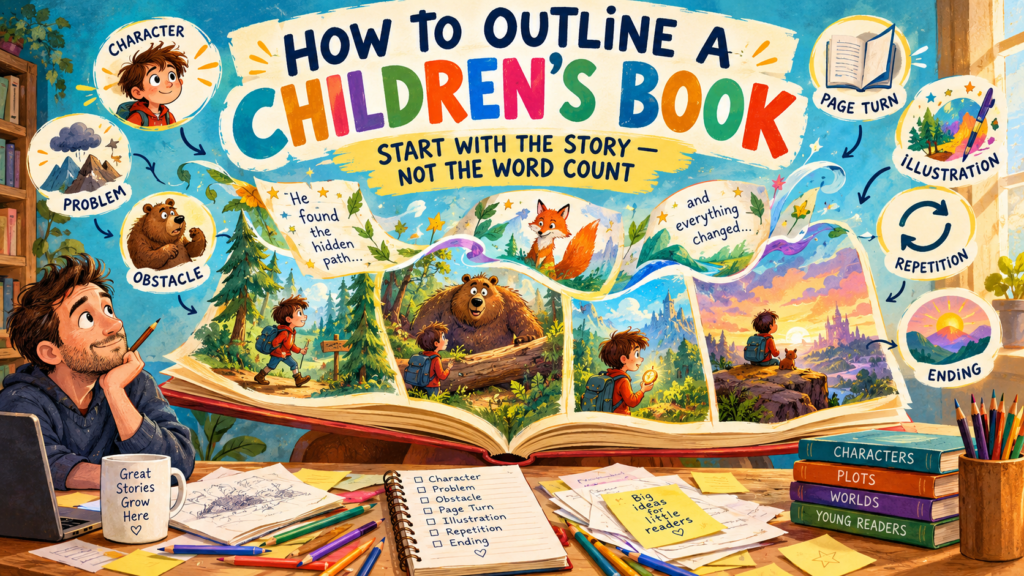
There is a dangerous assumption about children’s books. Because they’re short, they’re easy. You only need a few hundred words. The sentences are simple. The . . .
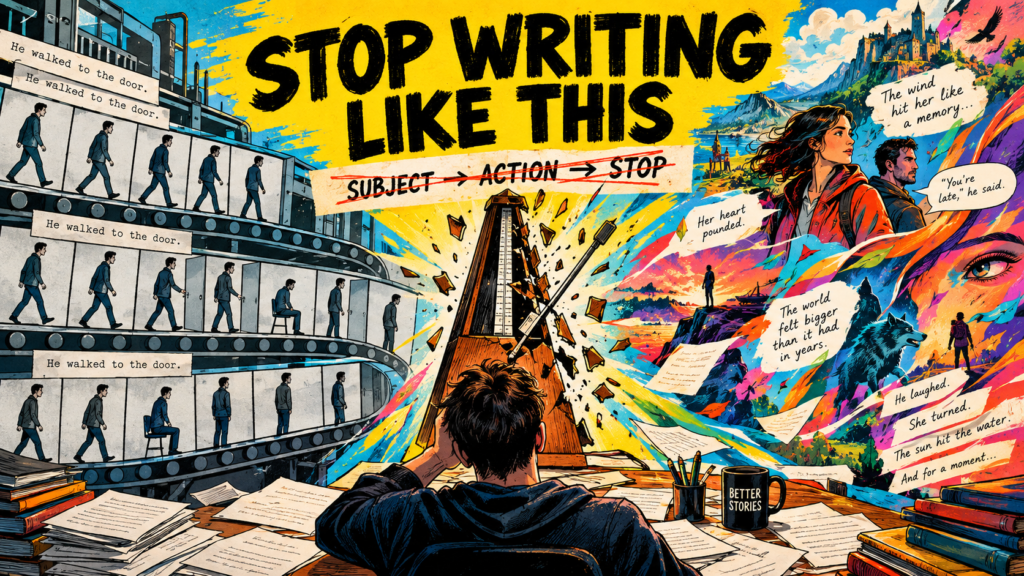
There is a piece of writing advice that sounds sensible, looks sensible and is, in isolation, absolutely sensible: Keep your writing clear. Put the character . . .
There is a particular moment in writing a novel that can make you question every decision you’ve made since the first chapter. You’ve been writing . . .
There comes a moment in every writer’s journey where confidence quietly turns into suspicion. You’ve finished your manuscript.You’ve edited it.Maybe you’ve even rewritten large chunks . . .