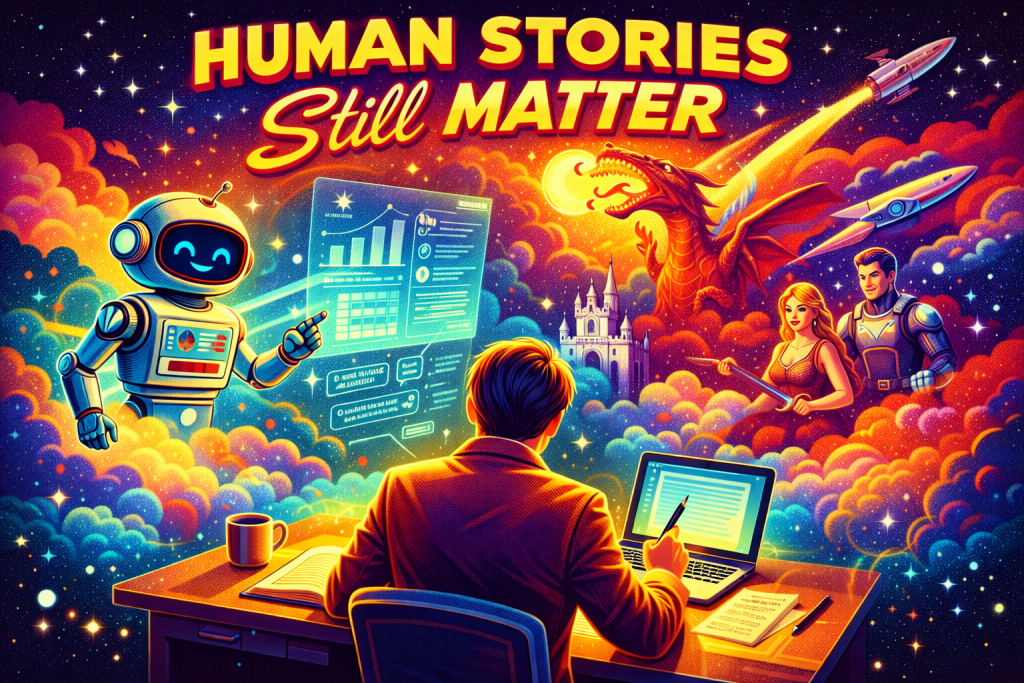
Artificial intelligence is rapidly changing the way people write. Tools can generate outlines, suggest dialogue, correct grammar, and even draft entire chapters in seconds. For many writers, that’s exciting. For others, it’s terrifying.
A question keeps coming up in writing communities: Will AI eventually replace human storytellers?
The short answer is no. AI can assist writers, but it cannot replace the human heart at the center of storytelling. To understand why, we need to look at what stories actually are.
Stories Come From Lived Experience
Every writer carries a lifetime of experiences—memories, emotions, fears, victories, regrets. These experiences shape the stories they tell.
A breakup might inspire a tragic romance. A childhood fear might become the monster in a horror novel. A moment of courage might become a heroic character arc.
AI doesn’t have experiences. It doesn’t remember childhood, feel heartbreak, or wrestle with regret. It can only remix patterns from existing material. While that can produce convincing writing on the surface, it lacks the emotional depth that real experiences bring to a story.
Readers can often sense the difference.
Emotion Is More Than Words
Great storytelling isn’t just about putting sentences together. It’s about making readers feel something.
A powerful story can make readers:
- Laugh at a clever line of dialogue
- Cry during a character’s loss
- Feel anxious during a tense moment
- Celebrate when the hero succeeds
Human writers understand these emotions because they have felt them. They know how grief changes a person. They know how hope can carry someone through impossible odds.
AI can describe emotions, but it cannot feel them. Without genuine emotional understanding, stories risk becoming technically correct but emotionally hollow.
Human Perspective Creates Originality
Many people worry that all stories have already been told. In a sense, that’s true—there are only so many core story structures.
What makes stories unique is perspective.
Two writers can tell the same basic story idea and produce completely different books because they see the world differently. Their beliefs, culture, humour, and personal history shape how they write.
AI, on the other hand, learns by analysing massive amounts of existing text. Its output is fundamentally a blend of patterns it has already seen.
This means AI is naturally derivative. It can remix ideas well, but it struggles to produce truly original perspectives.
Human creativity still leads the way.
Imperfection Is Part of Great Writing
Some of the most memorable stories contain imperfections.
A strange metaphor. An unusual narrative voice. A risky plot choice that breaks traditional rules.
These quirks often come from a writer taking creative risks or following instinct rather than strict structure. Those imperfections give stories personality.
AI systems are designed to optimise patterns and probabilities. They tend to smooth out the rough edges that make writing distinctive.
Ironically, what makes writing human—its imperfections—can also be what makes it memorable.
AI Is a Tool, Not a Replacement
This doesn’t mean AI has no place in writing.
Used properly, it can be extremely helpful. Writers are already using AI tools to:
- Brainstorm story ideas
- Generate writing prompts
- Overcome writer’s block
- Edit grammar and clarity
- Explore alternative plot directions
Think of AI as a creative assistant, not a storyteller.
The writer still decides what the story means, how characters grow, and what emotional journey readers will experience.
Readers Want Human Voices
Stories have always been about connection.
When readers pick up a book, they aren’t just reading words—they’re connecting with another mind. They’re experiencing someone else’s imagination and worldview.
That connection matters.
Readers want to feel that a real person created the story they’re experiencing. Someone who cared about the characters. Someone who wrestled with the same questions and emotions they have.
AI can produce text, but it cannot share a human life.
And storytelling, at its core, is about sharing what it means to be human.
The Future of Storytelling
Technology will continue to evolve, and AI tools will become more powerful. Writers who learn to use these tools intelligently may gain new creative advantages.
But the heart of storytelling will remain unchanged.
Stories are born from curiosity, empathy, struggle, and imagination—qualities that belong to people, not machines.
So if you’re worried about AI replacing writers, remember this:
AI can help you write faster.
It can help you brainstorm ideas.
But it cannot replace the human voice behind the story.
And that voice is what readers come for.
If you spend any time around writing communities today, you’ll eventually encounter a bold claim: “You can write an entire novel with AI.” Some websites . . .
There’s a quiet, persistent fear that creeps into a lot of would-be writers’ minds. It usually arrives disguised as a sensible question, but it carries . . .
Ask a room full of writers whether originality still matters, and you’ll witness an immediate and passionate divide. Half will insist that nothing truly original . . .
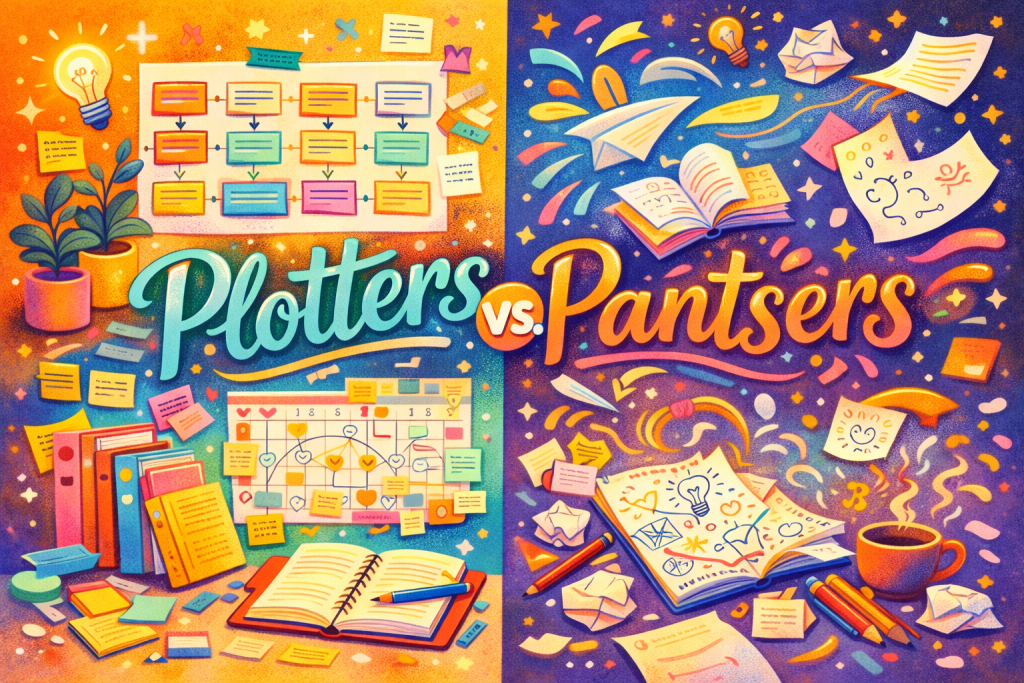
There are two kinds of writers in the world. (Or at least, that’s what the writing internet has decided.) On one side, we have the . . .