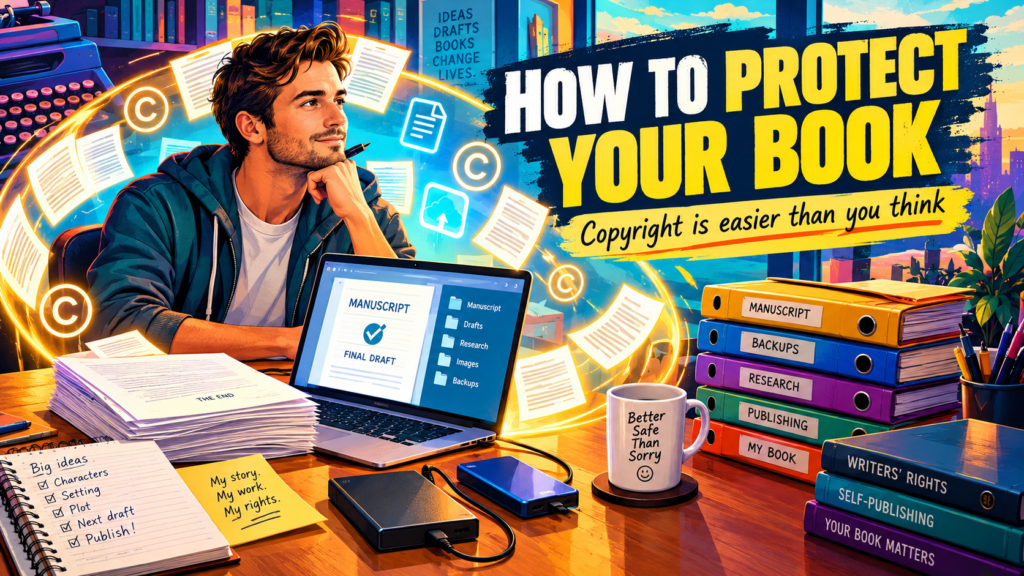
There is a question almost every new writer eventually asks:
“How do I copyright my book?”
The answer is probably going to be more reassuring than you expect.
If you’re in the UK, you don’t have to fill in a complicated application, pay a government registration fee or send your manuscript somewhere to make it legally yours.
Copyright happens automatically.
The moment you create an original literary work, such as a novel, it is protected by copyright. There is no UK government copyright register that you need to put your book onto.
But there is an important second part to this.
Having copyright and proving that you own it are not quite the same thing.
And that’s where sensible authors should pay attention.
First: Stop Thinking You Need to “Apply” for Copyright
One of the biggest misconceptions among new authors is that copyright is something you have to buy.
It isn’t.
In the UK, copyright protection is automatic. Original literary works qualify for copyright protection when they are created.
So if you sit down today and write 80,000 words of a novel, you don’t suddenly need to send the manuscript to an official copyright office before it belongs to you.
It already has copyright protection.
You can also put a copyright notice in your book, such as:
© 2026 Your Name
That isn’t what creates the copyright. The protection already exists.
The notice simply makes your ownership clear.
The same principle applies whether you’re writing a novel, collection of short stories, poetry, children’s books or another original literary work.
Your Idea Isn’t Copyrighted. Your Book Is.
This distinction matters.
You can have an amazing idea for a novel.
Perhaps you’ve invented a brilliant concept involving a detective investigating murders on a generation ship travelling to Mars.
You might tell somebody about it.
They could then write their own science-fiction murder mystery involving a detective on a spaceship.
That doesn’t automatically mean they have stolen your copyright.
Copyright protects the expression of an idea, rather than the underlying idea itself.
That’s why you shouldn’t become obsessed with protecting every idea you have.
Your notes, your scenes, your characters, your dialogue and the actual manuscript are what you have created.
The idea sitting inside your head isn’t a copyrighted novel.
The novel you write is.
So What’s the Easiest Way to Protect Your Book?
For most writers, I’d keep it remarkably simple.
1. Write the book
Obvious, perhaps.
But it’s the most important step.
Your manuscript is your primary piece of evidence.
Don’t worry about elaborate schemes involving envelopes, secret passwords or complicated copyright rituals.
Write your book.
2. Keep your drafts
This is where writers can make things much easier for themselves.
Don’t just keep the final manuscript.
Keep your earlier versions too.
Keep your planning documents.
Keep your character notes.
Keep your research.
Keep your discarded chapters.
Keep dated versions of the manuscript.
Why?
Because they create a history of the work.
If somebody ever claimed that they wrote your book, having a series of dated drafts showing how the manuscript developed could be extremely useful evidence.
The UK Intellectual Property Office itself recommends keeping records relating to the creation of intellectual property, as this can help support your position in a future dispute.
This is one of those things that costs you absolutely nothing.
And you should do it anyway.
3. Back Everything Up
Don’t keep the only copy of your novel on your laptop.
That’s not copyright advice.
That’s common sense.
Keep your manuscript in more than one location.
For example:
Computer → Cloud storage → External backup
You don’t need a ridiculously complicated system.
You just need to avoid the nightmare scenario where your laptop dies and you discover that your only copy of your 90,000-word masterpiece disappeared with it.
And remember that your backups aren’t only useful for recovering lost files.
They can also help establish the development and history of your manuscript.
4. Put a Copyright Notice in the Book
Again, this doesn’t create your copyright.
But I recommend doing it.
Something as simple as:
Copyright © 2026 Your Name
is enough to make your position clear.
You can also include a rights statement explaining that the book may not be reproduced, distributed or adapted without permission.
The UK government confirms that you can mark your work with the copyright symbol, your name and the year of creation, although doing so does not affect the level of legal protection.
In other words, don’t imagine that adding the © symbol magically activates copyright.
It doesn’t.
But there’s no good reason not to make your ownership obvious.
What About “Posting It to Yourself”?
This is one of those pieces of advice that refuses to die.
The idea is simple:
Print your manuscript.
Put it in an envelope.
Post it to yourself.
Don’t open it.
Keep the envelope because the postmark supposedly proves when you wrote the book.
It sounds clever.
It isn’t something I’d rely upon.
The UK Copyright Service specifically describes this old “poor man’s copyright” approach as misguided because an envelope can potentially be opened and its contents replaced.
There are much better ways of maintaining evidence of when your manuscript existed.
Keep your digital drafts.
Keep your working files.
Keep your backups.
Keep your emails.
Keep your research.
Keep your development notes.
That’s a much more convincing record of how a manuscript actually evolved.
Do You Need to Register Your Book?
Here’s where things become slightly more complicated.
You don’t need to register your book with the UK government to obtain copyright protection.
There is no government copyright registration system in the UK.
However, there are private copyright registration services that allow authors to deposit a copy of their work and obtain independent evidence of the date and content of that work.
The UK Copyright Service, for example, offers copyright registration for manuscripts and other creative works.
Is that the same as “getting copyright”?
No.
That’s an important distinction.
You’re paying for evidence, not for the copyright itself.
Whether you think that additional evidence is worth paying for is a personal decision.
For most first-time authors, I’d start with sensible record keeping rather than assuming you must pay for registration.
If you’re working on something commercially valuable, collaborating with other writers, dealing with contracts or facing a potential dispute, professional legal advice may be sensible.
The Most Important Thing: Know What You Actually Own
This becomes particularly important when you start working with other people.
Suppose you pay someone to edit your novel.
Or hire an illustrator.
Or commission a cover designer.
Or work with another writer.
Or employ somebody to produce material for you.
Don’t assume that saying “I paid for it” automatically answers every copyright question.
Copyright ownership can depend upon the circumstances in which the work was created and the contracts involved. The creator is generally the first owner of copyright, subject to important exceptions such as works created by employees.
This is why contracts matter.
If somebody is creating original material for your book, make sure you understand what rights you’re actually receiving.
Don’t wait until there’s a disagreement.
What Happens If Somebody Steals Your Book?
This is the part nobody likes talking about.
Copyright doesn’t physically stop somebody from copying your work.
It gives you legal rights over how that work is used.
If someone reproduces or distributes your work without permission, that can constitute copyright infringement.
But you are generally responsible for enforcing your rights.
That means you need to keep an eye on your work.
If you discover somebody has copied your novel, don’t immediately start firing angry emails and threatening people with prison.
First establish what has actually happened.
Save evidence.
Take screenshots.
Record URLs.
Download copies where appropriate.
Keep dates and correspondence.
Then consider the appropriate response.
For a serious dispute, get professional legal advice.
The important point is this:
Your copyright gives you rights. It doesn’t give you a magical copyright police force.
You still have to defend those rights when necessary.
Don’t Confuse Copyright With Protecting Your Book’s Title
Here’s another common misconception.
You’ve written a novel called The Last House.
Does copyright give you exclusive ownership of that title?
Generally, no.
Copyright protects the original literary work.
A short title or phrase may not qualify for copyright protection in its own right.
If you’re building a brand around a name, series name, logo or other commercial identity, you may need to think about other forms of intellectual property protection, such as trade marks.
Copyright is not the answer to every intellectual property problem.
It’s one tool.
Use the right tool for the job.
What I Would Actually Do If I Finished a Novel Tonight
Let’s make this ridiculously simple.
You’ve just typed:
THE END
Congratulations.
Now do this.
Step 1: Save the final manuscript
Save it as a clearly named file.
For example:
Novel Title – Final Manuscript – October 2026
Step 2: Keep your previous drafts
Don’t delete everything because you’ve finished.
Those earlier versions have value as part of the development history of the manuscript.
Step 3: Back it up
Put it somewhere separate from your computer.
Cloud storage is an obvious option.
An external drive is another.
Use both if you want additional protection.
Step 4: Add a copyright notice
Put a simple copyright notice in the appropriate place in the finished book.
© 2026 Your Name
Step 5: Keep your evidence
Keep your notes, drafts, research, emails and other development material.
Step 6: Be careful with contracts
If editors, illustrators, co-authors, designers or other freelancers contribute original material, understand who owns what.
Step 7: Consider registration if the circumstances justify it
You don’t need registration to have copyright.
But you might decide that independent evidence of your work’s date and content is worth paying for, particularly if your manuscript has significant commercial value.
That’s a business decision, not a requirement for copyright.
Your 7-Day Author Protection Plan
If you’re currently sitting on an unpublished manuscript, here’s something you can do this week.
Day 1 — Organise your manuscript
Create one master folder for the book.
Day 2 — Gather your drafts
Find your previous versions and put them somewhere safe.
Day 3 — Back everything up
Create at least one backup outside your main computer.
Day 4 — Organise your development material
Keep notes, research, outlines and other useful evidence.
Day 5 — Check your copyright page
Make sure your finished manuscript contains a sensible copyright notice.
Day 6 — Check your contracts
If you’ve used freelancers or collaborators, make sure you understand the rights you’ve agreed.
Day 7 — Decide whether you need additional evidence
For most writers, good records and backups are a sensible starting point.
If you’re dealing with a commercially significant project or a genuine dispute, consider professional intellectual property advice.
Don’t Spend Money Because Someone Scared You
This is probably the biggest takeaway.
There is an entire ecosystem of people willing to sell frightened new writers the idea that their manuscript isn’t safe unless they pay somebody to “copyright” it.
Be careful.
In the UK, copyright protection is automatic.
You don’t need to buy copyright.
You don’t need to send your manuscript to the government.
You don’t need to post it to yourself.
And you don’t need to spend hundreds of pounds simply because somebody told you that your book isn’t protected otherwise.
Write it. Keep your drafts. Back it up. Make your ownership clear. Understand your contracts. Keep evidence.
That’s a much better starting point.
And if you ever reach the point where somebody genuinely has copied your work, that’s when you stop relying on internet myths and get proper advice about enforcing your rights.
Because protecting your book isn’t about wrapping it in cotton wool.
It’s about creating a clear, sensible trail showing what you created, when you created it and what rights you own.
That’s the part worth getting right.
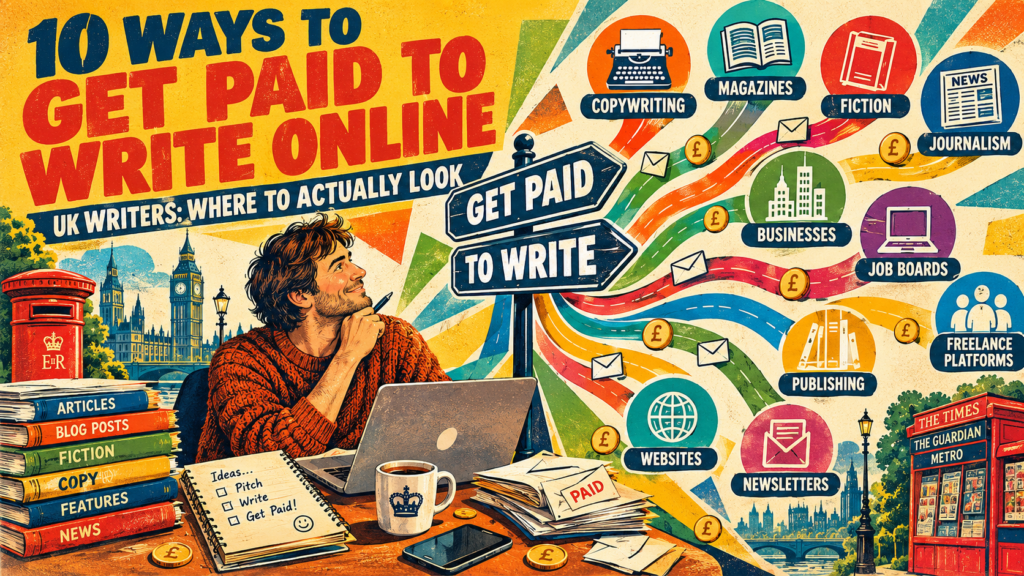
If you can write, there are more ways to make money from your words than simply trying to get a novel published. That doesn’t mean . . .
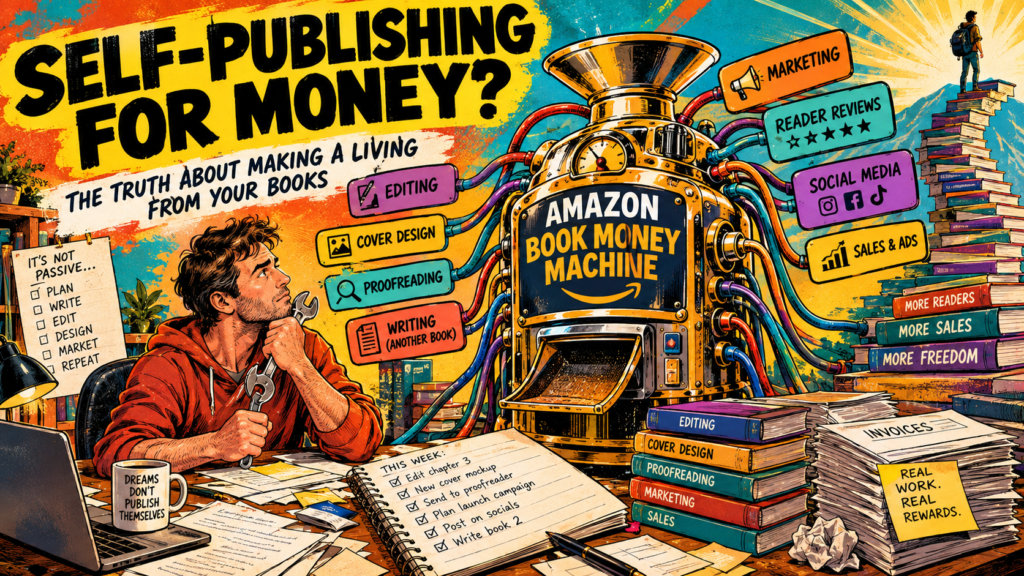
There is a very attractive idea floating around the internet. Write a book. Publish it on Amazon. People buy it while you sleep. Then write . . .
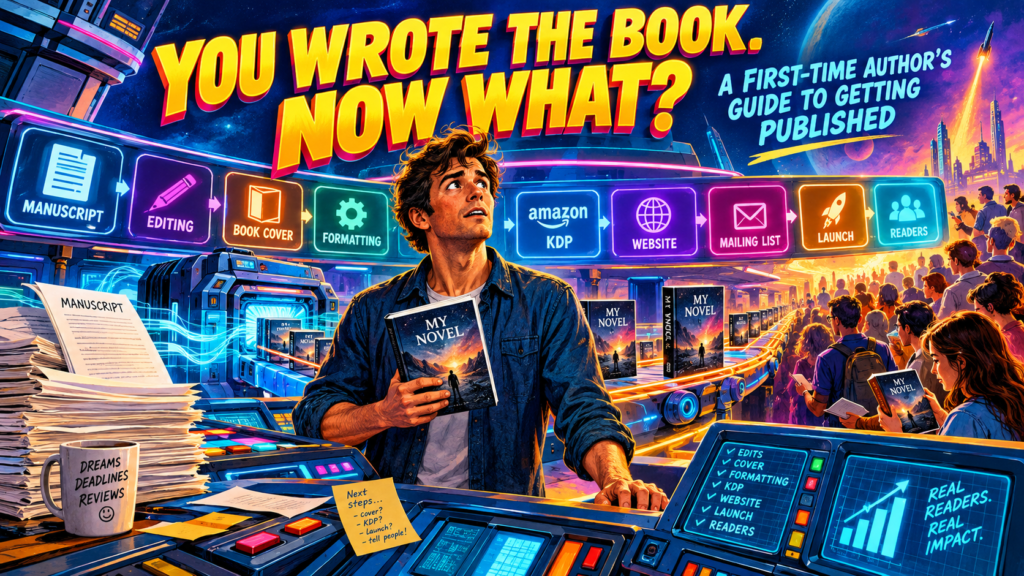
There is a particular moment every writer dreams about. You type the final sentence. You write THE END. You sit back, perhaps with a cup . . .
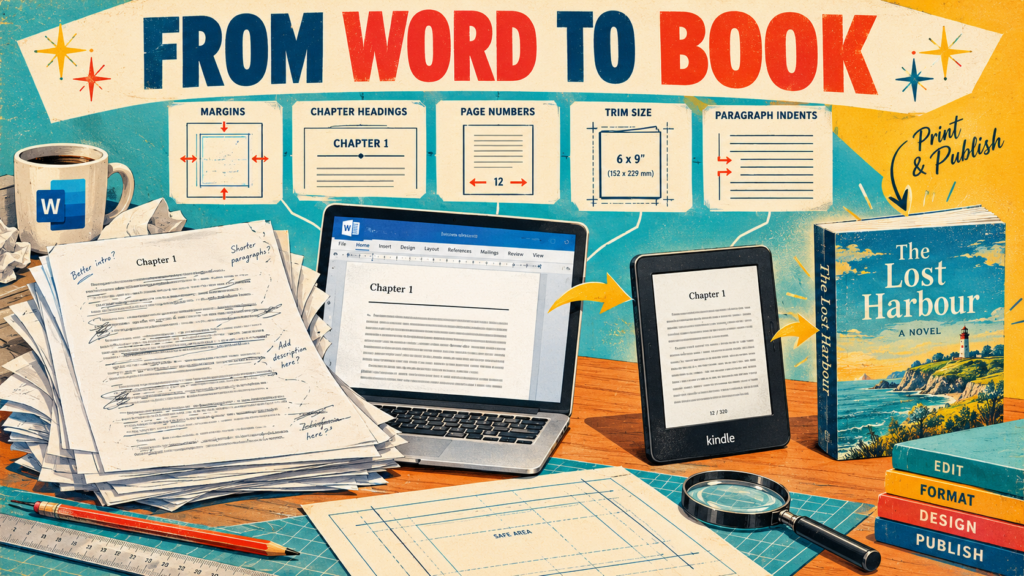
Finishing the novel is the hard part. Or at least, that’s what you tell yourself. Then you open Microsoft Word and discover that you now . . .