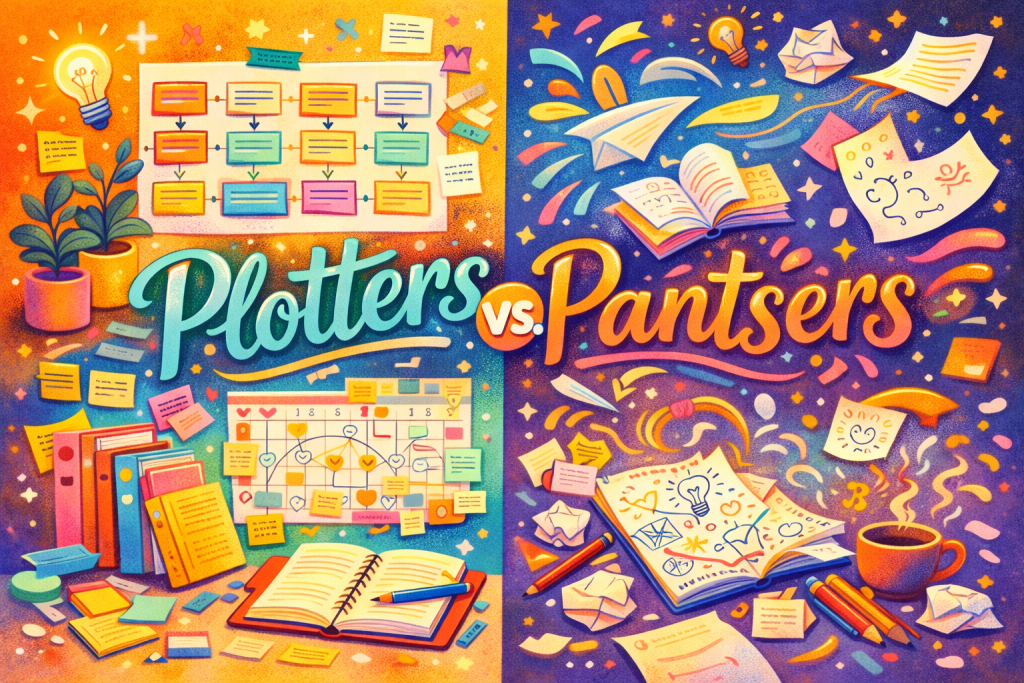
There are two kinds of writers in the world. (Or at least, that’s what the writing internet has decided.) On one side, we have the . . .

The question of whether writers should use AI tools to help them write has become one of the most divisive debates in modern creative circles. . . .

Every writer dreams of that perfect plot—the one that flows naturally, keeps readers hooked, and actually makes sense from start to finish. But here’s the . . .
Every aspiring writer has been there: staring at a blank page, paralyzed by the weight of creating something perfect. The cursor blinks mockingly. Hours pass. . . .

Most writers approach their craft like archaeologists—digging through layers of rough drafts, chiselling away at clunky sentences, and hoping to unearth something resembling a coherent . . .

Every morning, I sit down at my desk with the same ritual: coffee steaming beside my keyboard, cursor blinking expectantly on a blank page, and . . .
You’ve crafted the perfect plot twist, nailed your pacing, and polished every sentence to perfection. So why do readers still say your characters feel “flat” . . .
Every writer obsesses over word counts and daily targets. But what if the secret to better writing isn’t about quantity at all? There’s a dirty . . .

Every successful author has made these mistakes. The difference? They learned to spot them early. You’ve been staring at that blank page for weeks. Maybe . . .

The path to publication has always been filled with both challenges and opportunities, but today’s writing landscape is evolving faster than ever. As you work . . .