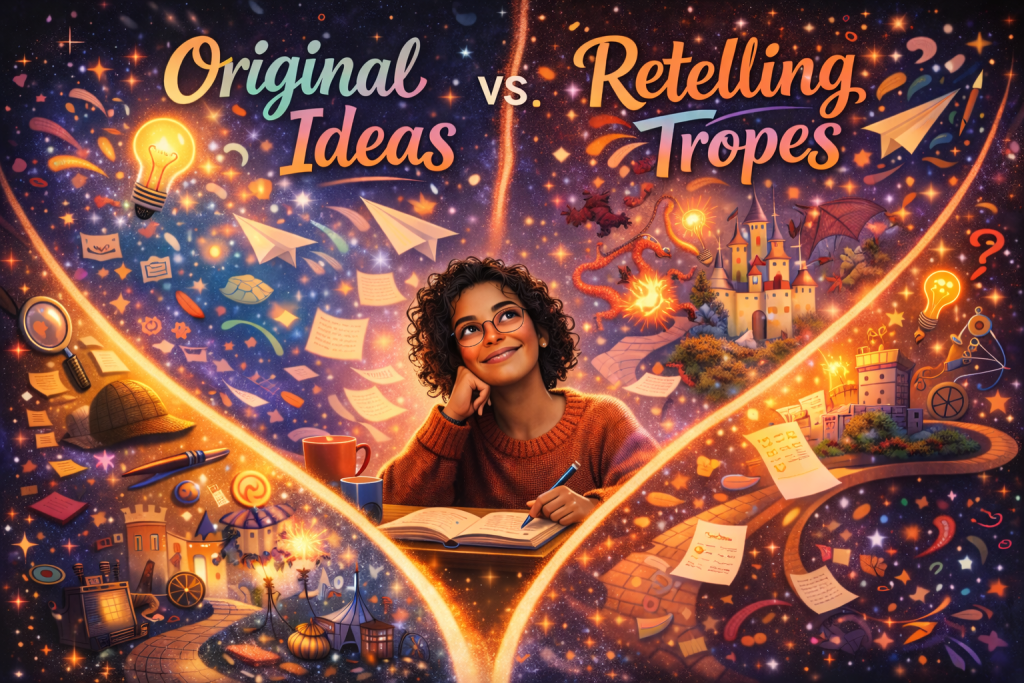
Ask a room full of writers whether originality still matters, and you’ll witness an immediate and passionate divide. Half will insist that nothing truly original exists anymore — that every story has been told, retold, and recycled until the bones are worn smooth. The other half will swear that originality is not only possible, but essential — that every writer brings something new and irreplaceable to the conversation.
And somewhere in the middle sit the readers, quietly asking:
“I just want a great story. Does it really matter where it came from?”
Today, I want to dig beneath the slogans and absolutes and explore this question with you — not as an academic debate, but as a working writer who has spent more evenings than I care to admit staring at a blinking cursor and wondering:
Should I chase something startlingly new… or write my own twist on something familiar?
Let’s talk about both.
The Seduction of the “Original Idea”
There’s a particular thrill in believing you’ve stumbled upon an idea no one else has touched. Maybe it came to you while queueing at the supermarket, or halfway through your commute. Suddenly a “what if?” blooms in your mind:
- What if grief could be bottled?
- What if lies left visible stains on our skin?
- What if a city slowly forgot it existed?
These ideas feel electric. Untamed. Dangerous. You can almost hear them crackle.
And originality does matter — but perhaps not in the way new writers often think it does.
We tend to mistake originality for concept.
But readers experience originality far more deeply in:
✔ character
✔ voice
✔ emotional lens
✔ personal truth
Two writers can begin with the exact same premise and produce wildly different books — one dark and philosophical, another playful and romantic — purely because their inner worlds aren’t the same.
Originality, then, often comes less from the idea itself and more from how deeply you’re willing to reveal the way you see the world.
That’s both liberating and terrifying.
Because it means originality asks something vulnerable from you.
It asks for honesty.
It asks for specificity.
It asks you to stop trying to sound like a writer and instead sound like yourself.
The Quiet Power of Tropes and Retellings
Now let’s talk tropes — those familiar story patterns and retellings that some writers treat like training wheels and others like an outright creative betrayal.
I’m going to say something that might shock the “pure originality” camp:
Readers love tropes for a reason.
Tropes are narrative shorthand — a promise whispered between writer and reader.
When a reader sees:
- enemies-to-lovers
- the chosen one
- the reluctant detective
- the “one last job” thief
they already know the emotional shape of the journey. It’s comforting — like sitting down to your favourite meal, knowing the satisfaction is coming, even if the spices are different every time.
And retellings — whether fairy tales, myths, or beloved classics — allow readers to experience something familiar while still hungering for the twist. We aren’t reading to find out what happens.
We’re reading to discover how this writer will make it matter.
Take Cinderella.
Retold enough times to fill a small library — and yet each retelling becomes a mirror reflecting the era in which it was written:
- Sometimes it’s about social inequality.
- Sometimes it’s about resilience.
- Sometimes it’s about agency.
- Sometimes it’s about love — messy, flawed, inconvenient love.
The bones stay the same.
But the heartbeat changes.
That heartbeat is where craft — and art — lives.
So Which Do Readers Value More?
Here’s the truth, whispered softly so neither camp throws a chair at me:
👉 Readers value emotional authenticity more than originality.
What they crave is connection.
They want to lose themselves in lives that feel real — even if those lives unfold in a dragon-haunted land or a city floating in the sky.
If originality becomes the goal, you risk writing something clever but emotionally hollow — a glittering glass sculpture admired from afar, but never touched.
If familiarity becomes the crutch, you risk slipping into cliché — a paint-by-numbers story where readers can predict every beat before the characters do.
But when familiarity meets authenticity?
That’s when sparks fly.
Think of it like music.
Every pop song uses the same handful of chords.
What makes one song unforgettable and another forgettable isn’t the chord progression — it’s the human fingerprint stamped into it.
Stories are the same.
Where Writers Go Wrong With “Originality”
Let’s walk through a couple of traps most of us fall into at some point — myself included.
Trap 1: The Twist for the Sake of the Twist
You’ve seen this one. A story bends over backward to shock the reader — even if it means breaking logic to do it. The writer is shouting:
“Bet you didn’t see THAT coming!”
And they’re right. We didn’t.
Because it didn’t make sense.
True originality still feels inevitable in hindsight. Forced originality feels like a magician stuffing rabbits into his sleeve while everyone is watching.
Trap 2: Hiding Your Influences
Some writers panic when their story resembles anything else and start sanding away every familiar edge. The result? A shapeless blob that doesn’t commit to anything.
Influence isn’t the enemy.
Imitation is.
If you love something, study it. Understand what makes it sing. Then filter it through your own scars, memories, humour, heartbreak, and wonder.
That’s where transformation happens.
And Where Writers Go Wrong With Tropes
Tropes themselves aren’t the problem. It’s how lazily we sometimes use them.
Lazy Tropes Sound Like This:
- “This character is brooding because… well… that’s their thing.”
- “They fall in love instantly because the plot says so.”
- “The villain is evil because power.”
Tropes become hollow when they exist without human truth.
But when you ask why the trope exists in your story — what psychological or emotional need it serves — it deepens, roots itself, and grows teeth.
Enemies-to-lovers becomes a meditation on vulnerability.
The chosen one becomes a story about identity and pressure.
The heist becomes a story about loyalty and risk.
It’s never about the trope.
It’s about the people inside it.
The Most Valuable Thing You Can Bring to a Story
Let me give you a quiet secret — one I wish someone had told me years ago.
Your perspective is the most original thing you will ever own.
No one else has lived your life.
No one else has stood in your shoes.
No one else hears the world in quite the same emotional register you do.
Even if you write:
- a detective story
- a fairy-tale retelling
- a space opera
- a family drama
your interpretation of love, fear, guilt, longing, rage, and hope will shape the narrative in ways that can never be duplicated.
And that is where your originality lives.
Not in your premise.
In your truth.
So… Which Should You Choose?
Here’s my answer, after twenty years of writing, revising, failing, rewriting, and finally making peace with the process:
👉 Write the story that feels alive in your chest.
If that story is a retelling, own it — and make it deeply, unmistakably yours.
If that story is something strange and wild and hard to explain over coffee, honour it — and follow it through the dark.
Readers don’t sit down with a book to grade it on an originality rubric.
They sit down hoping to feel something.
Give them that — and you’ve already won.
A Final Thought — And a Small Challenge
The next time you worry your idea isn’t original enough, try this:
Open a notebook and write three things:
- What do I desperately want this story to say about the world?
- What truth am I afraid to tell — but will tell anyway through this story?
- What emotional journey am I inviting the reader onto?
If you can answer those honestly, you’re not writing a copy.
You’re writing a confession wrapped in fiction.
And no one else — anywhere — can write that but you.
There’s a quiet, persistent fear that creeps into a lot of would-be writers’ minds. It usually arrives disguised as a sensible question, but it carries . . .
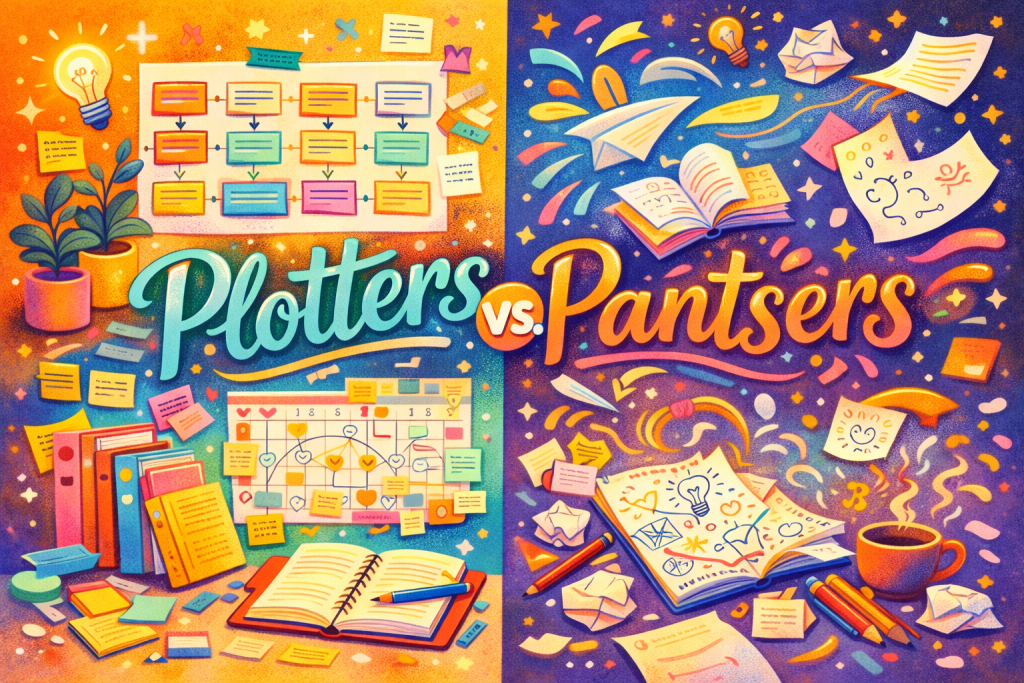
There are two kinds of writers in the world. (Or at least, that’s what the writing internet has decided.) On one side, we have the . . .
There’s a myth that has lodged itself firmly into the modern writer’s brain: to be a writer, you must have the latest laptop, a spotless . . .

The question of whether writers should use AI tools to help them write has become one of the most divisive debates in modern creative circles. . . .